
Ceramides show up on the front of a lot of moisturizers, usually next to words like barrier and repair. It is fair to wonder whether they do anything or are just another label trend.
They are one of the more useful ingredients to understand, especially if your skin often feels dry or tight. Here is what they are and how to use them.
Key Takeaways
- Ceramides are fats that occur naturally in the outer layer of your skin
- They help that layer hold water and feel comfortable
- Skin tends to have fewer of them with age and in cold, dry weather
- Ceramide moisturizers suit most skin types
- Look for ceramides alongside cholesterol and fatty acids on the label
What Ceramides Are
Ceramides are lipids, a type of fat, found naturally in the outermost layer of your skin. A common way to picture it is a brick wall: skin cells are the bricks, and ceramides are a big part of the mortar between them.
That mortar helps keep water in and everyday irritants out. When it is in good shape, skin tends to feel soft and comfortable instead of tight or rough.
On an ingredient list they appear as ceramide NP, ceramide AP or ceramide EOP, among other names. You do not need to memorize them, and many barrier creams use more than one type.
Why Skin Can Run Low
The amount of ceramides in skin tends to drop with age. Cold weather, dry indoor air, long hot showers and harsh cleansers can also strip the surface, which is why skin often feels tighter in winter.
How much you drink plays a part in how skin looks and feels too. If you are not sure what to aim for, try this free hydration calculator.
How to Use a Ceramide Moisturizer
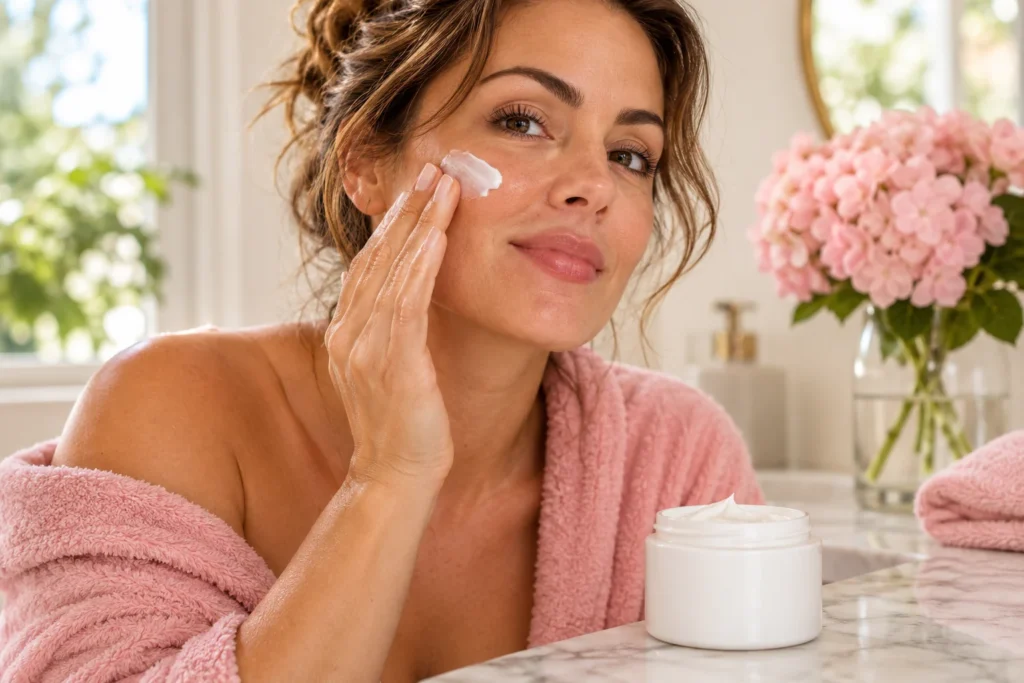
Ceramides are leave-on ingredients, so they make the most sense in a moisturizer or cream that stays on your skin. Apply it as the last step at night, and under sunscreen in the morning.
- Put it on slightly damp skin after cleansing to help hold water in
- Use it morning and night if your skin feels dry or tight
- Pair it with a gentle cleanser so you are not stripping what you just added
- Give it two to three weeks of steady use before you judge it
Ceramides get along with most other ingredients, which makes them an easy place to start a routine.
Who Should Be Careful
Ceramides themselves are well tolerated by most people. The other ingredients in a formula are usually the reason a product does not agree with someone, so patch test any new moisturizer on your inner arm for a day or two first.
If you have eczema, psoriasis or another diagnosed skin condition, ask your dermatologist which moisturizer fits your treatment plan.
This article is for general education and is not medical advice. Skincare products are cosmetics and are not intended to diagnose, treat, cure or prevent any skin condition.
Patch test new products first and stop using anything that stings or causes redness. See a dermatologist about skin concerns that are new, severe or lasting. Glow Luke links to reviews on coachluke.com, where Coach Luke may earn a commission if you buy.